Dealing with your child’s range of emotions can be challenging – especially if you yourself grew up in an environment where expression of emotions was not encouraged. However, it is SO IMPORTANT for your child to learn to express emotions in healthy ways. Emotions that are kept inside eventually make their way out – sometimes as outbursts, sometimes as anxiety, sometimes even as health issues later in life.
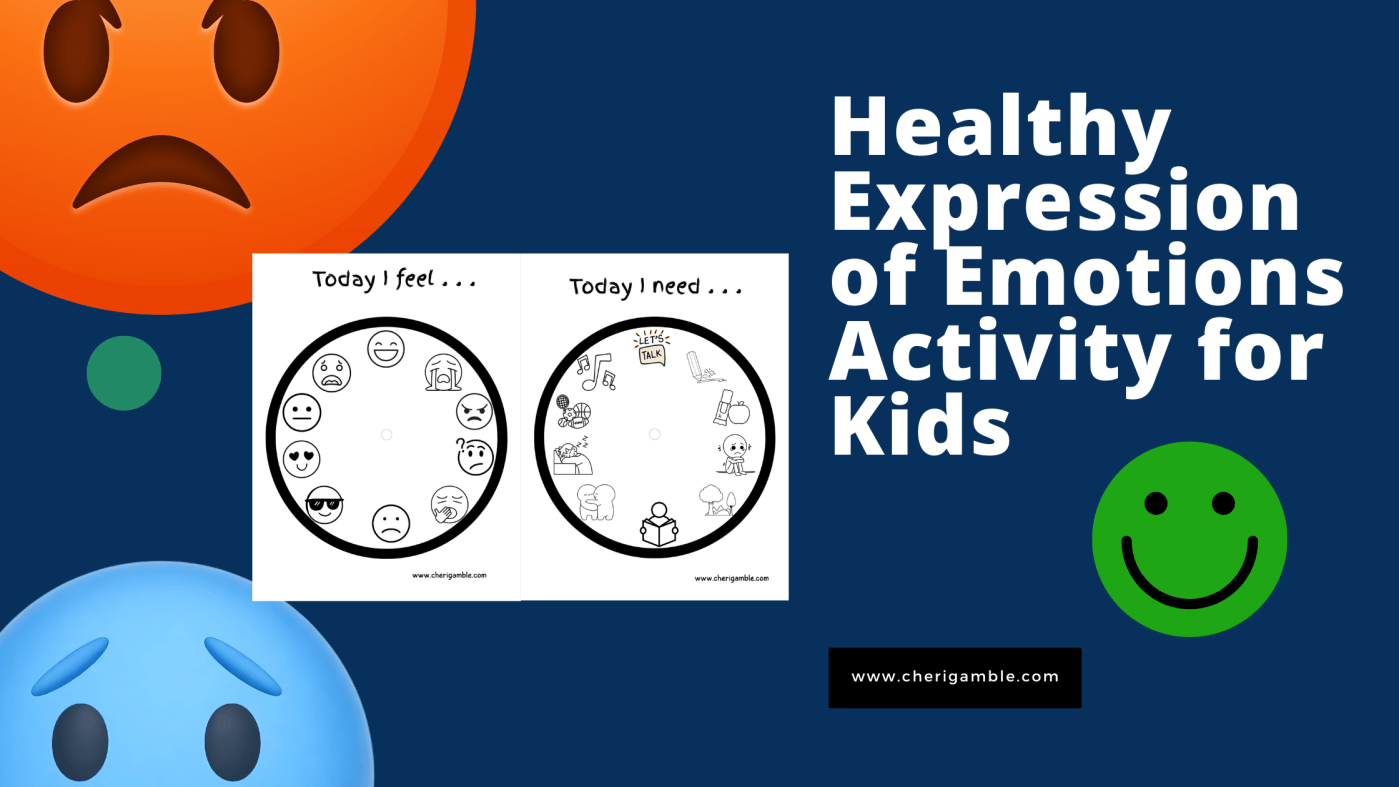
Help your child learn to express their emotions and communicate what they need in a healthy way with this activity! Print off the attached pages and follow the instructions to help your child communicate both how they are feeling and what they feel they need. Use the emotions and coping skills provided or make your own circles and let your child add the emotions and coping skills that are important to them.
Remind your child that being created in the image of God means being created with emotions and the ability to express them. When sin entered the world, it impacted the acting out of our emotions, but emotions, in and of themselves, are not sinful. Instead, emotions are reflections of God’s image in us!
Read Genesis 1:26-31 (or Genesis 1:27, 31 for younger children) and Ecclesiastes 3:1-11 (Ecc. 3:1,4,11).
Questions to discuss with your child:
- What emotions do you see displayed in Scripture?
- Which emotions are easier for you to recognize as reflecting the image of God? Which emotions are harder?
- Why do you think God created us with the ability to experience and express emotions?
- What makes it challenging to express emotions appropriately?
- Which emotions did you make time for this past week? Which ones might you need to make time for this week?
Prayer ideas:
- Spend time thanking God for each emotion he created!
- Ask God to help you express your emotions in ways that bring Him glory
An explanation of the “Today I need” page . . .
This page has possible ideas to help your child deal with the emotions they are experiencing. Talk with your child about the different ideas and allow your child to add their own ideas to this list! The ideas given here are (clockwise, starting at the top)
- Someone to talk to — If your child chooses this option, try to listen with an open mind. Let your child express what they are thinking and feeling, even if it is uncomfortable for them. The idea here is not to give them a solution or to correct behavior; instead, it is to help your child feel heard. Validate their feelings and let them know that their feelings are important to you, even if you don’t always understand them.
- An opportunity to write/draw/create: Some children really connect with creative activities as ways to express their emotions. If your child chooses this, provide paper, pencils, crayons, paint . . . anything you might have on hand . . .and let them create whatever they need to get their emotions out.
- A snack: Let’s be honest — sometimes the only thing needed to help a child deal with big emotions is a healthy snack! Being “hangry” is a real thing!
- Space to cry, yell, or whatever is needed: Sometimes your child might just need to cry or yell. If they choose this, give them the space to let the emotion out in a way that doesn’t physically hurt themselves or others.
- Some time in nature: Spending time outside can do wonders for challenging emotions. If your child chooses this, get them out in the sunlight. Notice the trees, birds, leaves . . . help your child be present and mindful of his surroundings and God’s amazing creation!
- Time to read: Reading can be a good distraction for children who enjoy it. Give your child space to curl up with their favorite book if this is chosen.
- A hug: Maybe all your child needs is a hug! If your child chooses this, give them a nice, long hug. This one might even help both of you!
- A nap: Remember what I said about snacks? The same is true about naps! Being tired can make every emotion feel more extreme. If your child chooses this one, let him rest.
- Physical activity: Some children need to move to get their emotions out. Let your child have that freedom! Can’t go outside? Turn the music on and let your child dance, jump, or run around the house.
- Music: And speaking of music . . . . Music can be an amazing way to help with expression of emotions. Help your child create a playlist for their different emotions and then have that on hand when needed. Does your child play an instrument? Let them use that to get emotions out, too.
What helps you and your child with healthy expression of emotions? Feel free to share in the comments!

 Cheri Gamble
Leave a comment