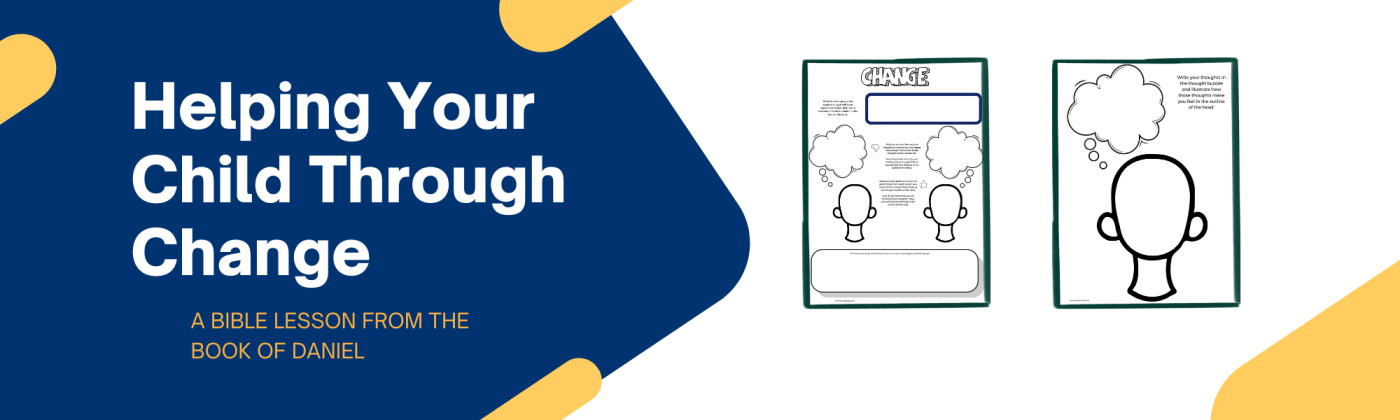
Change can be challenging for anyone — including our kids! Kids often struggle with change, even changes that might not seem like a big deal to adults. This post provides a Bible lesson from the book of Daniel to help kids deal with change. Also, be sure to scroll down for a BONUS — 7 tips to help your kids through change.
Activity:
Divide into small groups and give each group a pile of legos (or other toys that you build something with). Instruct each group to use the legos to make anything they want. Give the groups 10 minutes to complete their creations.
When 10 minutes are up, bring the groups back together and give each group a couple minutes to explain their creation. Then give each group one of the other group’s creations and instruct them to make one change to the creation they were given. After the changes have been made, bring the groups back together again.
Use the following questions to aid in your discussion:
- How did you feel when you were told that a different group was going to be making a change to your creation?
- What did you think of the change that was made?
- What is one good thing about the change that was made?
- Describe a change that has taken place in your life. How did you feel about it before it happened? How did you adjust to the change?
Say: Change can be hard – especially if the change was not our idea to begin with! Today we are going to talk about some people who had several major changes happen in their lives.
Bible Lesson:
Read Daniel 1:1-7. Say: Wow, there were a lot of changes that happen to Daniel and his friends in these verses! What changes do you see?
Use a white board or a large piece of paper to write down the different changes that occurred to Daniel, Shadrach, Meshach, and Abednego. Some possibilities include the following: New home, taken from their parents, new names, new food, surrounded by a foreign religion/people, having to learn a new language, new school
Say: Let’s see how these four responded to the change. Read Daniel 1:8-21. Ask: How did Daniel and his friends respond to the change? Even though so many things were different for them, some things stayed exactly the same. What are the things that stayed the same? (Possible answers: they followed God, God was with them, God took care of them, They were not alone)
Say: Even though so many things changed around them, Daniel and his friends did not change who they were! They followed God before they came to Babylon and they continued to follow God, even when everything around them was different. They never forgot who they were – they were God’s!
There’s a saying that goes something like this: “Bloom where you’re planted.” What do you think that means? It means that sometimes we can’t control where we are and the changes that happen but we CAN control how we respond. We can serve God and follow Him no matter what changes we face. It’s like a plant that gets taken from a pot inside a store and planted in the ground near a house far away. Will that plant still grow, even if it’s not in the store? Yes, it will! That plant will bloom and grow, adding color and joy wherever it is planted. Daniel and his friends bloomed and grew and impacted everyone around them, and you and I can do the same! No matter what changes happen in our lives, we know that we are children of God and His love for us never changes!
Read Hebrews 13:8. What is the promise in this verse? Jesus Christ is the same yesterday and today and forever!! We know that, even when the world around us feels like it is changing constantly, He will never change!
Handouts:
Use the handouts included with this lesson to help kids apply this lesson to a change in their lives.
Say: How we think about change can impact it a lot! What is a change that you are facing? If you have younger kids, give them each two copies of the handout with the outline of the head and the thought bubble. Have them draw or write the worries/negative thoughts they have about the change in the thought bubble on one of the pages. Then have them illustrate how they feel when they think those thoughts.
Say: It is often easy for us to think negative thoughts. When we have a negative thought, that’s the way we go and it can make us feel pretty bad. While those worries are real worries that you have about the change, there are positive things that could happen, too. Let’s think about the positive right now!
Have the kids take the other page and draw/write positive thoughts about the change in the thought bubble. Then have them illustrate how they feel when they think those thoughts on the outline of the head.
If you have older kids, use the Change worksheet. Walk them through the directions for each section. Have them write Hebrews 13:8 in the box on the bottom of the page before finishing the handout.
Say: We can often get caught up in the negative thoughts – especially when it comes to change. Daniel and his friends could have very easily gotten stuck in negative thoughts and that might have changed how they responded to what was happening to them. Instead, they remembered who they were and that God was with them. We can remember the same thing — no matter what change we are facing!
End the lesson by praying for each child and the changes they are facing.
7 Ways to Help Your Kids Deal with Change
- Let them express sadness over the loss. Change can include loss and our kids need to be allowed to grieve those losses. Help your child make a list of the losses, let them share how they feel, and above all, let them know that their feelings matter.
- Talk about the positive things that could happen with this change. Our minds tend to go automatically to the negative things and we can easily get stuck there. We have to be intentional about looking for positives. Use the worksheet above to help your child express negative thoughts, but then turn the paper over and help them think of all the positives!
- Flip the “what-ifs”. Again, we tend to get stuck on the negative “what-ifs”, when the positive “what-ifs” are just as likely. Help your child flip the what-ifs around. For example, “What if I can’t make friends” could become “What if I make a friend who becomes my best friend for life?”
- Remind them that your love for them will never change. No matter what the change is, you will still love them and SO WILL GOD! His love for them will never change!
- Remind them to bloom where they’re planted! The change does not change who they are and they have a choice how to respond. Encourage them to continue to grow, bringing color and joy to their new environment. (Consider getting a plant from the store and transplanting it somewhere as a reminder to your child to bloom where he’s planted.)
- Keep a “change journal” of all the positives that happen leading up to and following the change. Try to add items to it on a regular basis.
- Don’t be afraid to talk about life before the change. This is part of the grieving process and can be healing to both of you. Let them know it’s okay – and healthy – to remember what life was like before the change occurred and let them know that you are available and want to listen to them.
Have you gone through a recent change with your children? How did you help them through? Feel free to share in the comments!

 Cheri Gamble
Leave a comment