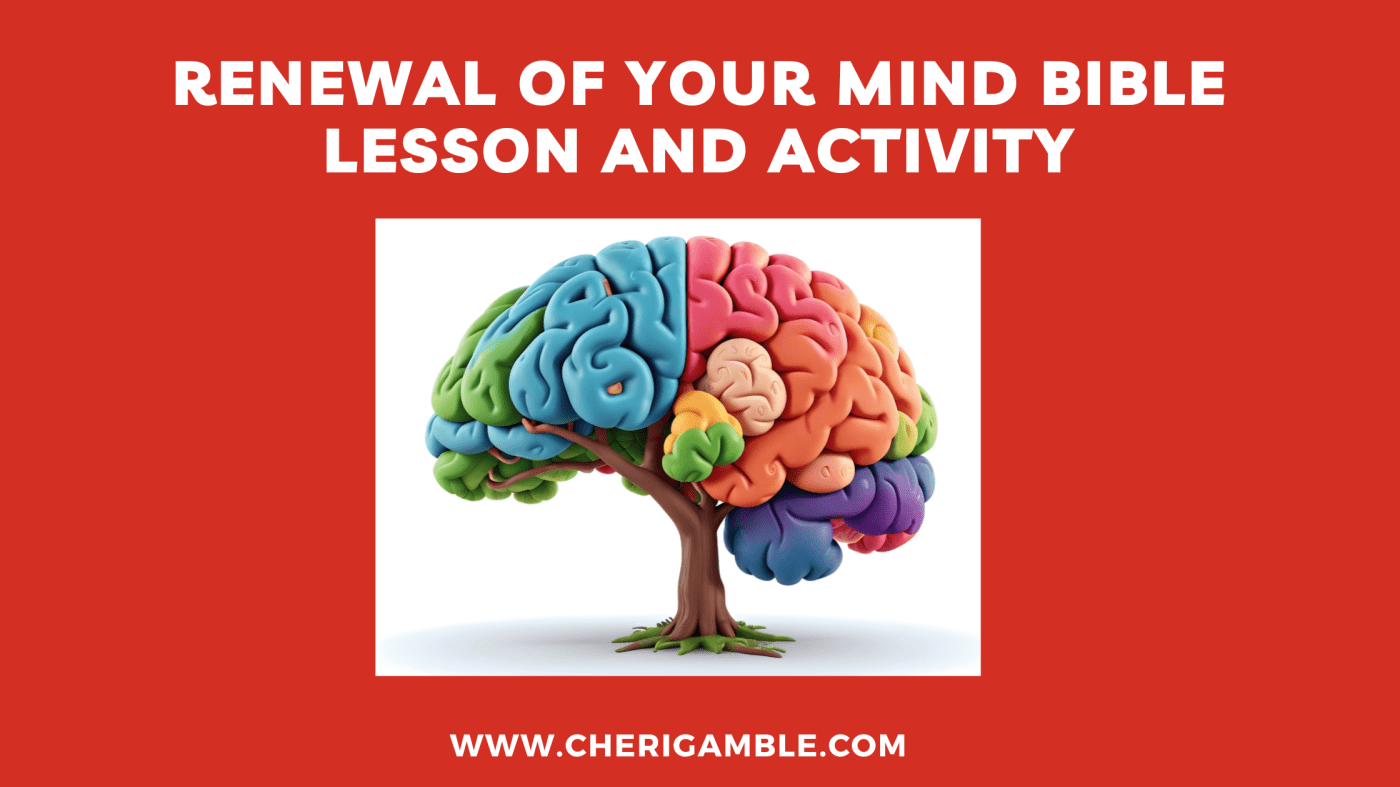
This week I have an activity that you can do with your family or group to help build new neural pathways in the brain!
Yes, you read that correctly. Consider this:
What we focus on and think about can LITERALLY change our brains.
Think of the neural pathways in your brain as trails in the woods. The more you walk a certain trail, the clearer the path becomes, making it more likely that you are going to use that path in the future. After all, it’s much easier to use a beaten down old trail than it is to create a new one.
Similarly, the more you think about something, the stronger that path in your brain becomes. This is why it can sometimes feel really hard to change the way we think – the pathways have been used so much that it is the way we seem to naturally go. After all, it’s much easier to go down those pathways of thought than it is to create new ones.
But it’s not impossible!
Brain science calls it “neuroplasticity”, the ability to create new neural pathways in the brain. The Bible calls it “the renewal of your mind.” By choosing to focus on those things that are true, honorable, just, pure, lovely, commendable, excellent, and worthy of praise, we can create new neural pathways. Our brains can be transformed.
So here’s a lesson you can use with your students to help start this process . . .
Start by “going on a walk” with your students through your house or church. If the weather is nice, take them outside for this part. As you are walking, talk about how trails can get beaten down and easier to use the more people walk on them. Have you ever tried to make your own path through the woods? What was that like?
Come back inside (or go back to the main meeting area) and draw an outline of a head on a whiteboard or large piece of paper. Draw a brain shape in the outline as well. Say: Our brains have trails, too. The more we think about something, the easier that trail becomes to follow. What are some of the things you (or kids your age) think about? Choose kids to come up front and make “trails” through the brain on the outline you drew. Ask each child to give their trail a name based on the thought. (For example: “This trail is for when I think about my family and friends,” or “This trail is when I think about God.”)
Let’s take a moment to see the types of things God wants us to think about and how we can choose to think about things that make strong, positive trails in our brains!
Read Philippians 4:8
- What types of things does this verse say we should think about?
- Give some examples of things that fall in these categories
- Why do you think it is important to be careful what you think about? (Use the summary above as well as the information you have already shared to help provide an explanation of neuroplasticity and the way what we focus on impacts our brains)
- What are some things that are unhelpful to think about? What are those things that you might need to let go of?
Read Romans 12:1-2
- What does it mean to be conformed to the pattern of this world?
- What does it mean to be transformed by the renewal of your mind?
- How can you live out these verses in your life at home, at school, at work?
What we think about and focus on is SO IMPORTANT! Let’s do an activity to help us build transforming neural pathways in our brains!
Activity:
Give each person a copy of the tree and leaves handout or have them draw their own trees and leaves.
Write things that you want to think about on some of the leaves and glue them on the branches. What are you grateful for? What good things have happened in your life? These are the things you want to focus on.
Write things that you no longer want to think about on some of the leaves. These could be things that have happened in your past, mistakes you’ve made, or thoughts/beliefs you have about yourself that are not true. Glue those leaves in a pile on the ground, away from the tree. These are the things you want to let go of.
After students have completed the activity, say: Shake off the thoughts/beliefs/past mistakes/sins that have no place on your tree anymore. With younger children, you could have them stand up and pretend to shake the leaves off. Say: We are going to get rid of all these. They don’t need to take up any space on our tree (or in our brains) anymore!
Think about those things that you are grateful for! Let’s hold them up and praise God for them right now. With younger children, you could have them raise their “branches” (arms) up high and shout out the things they are grateful for.
When you start to think about something that is not true, honorable, just, pure, lovely, commendable, excellent, and worthy of praise, shake those leaves off your tree and rake them away! Those thoughts have no place in your brain (or on your tree) anymore!
End by praying together or singing a song of praise.
For an added group activity to make this last all season long, make a giant tree in the classroom and provide a variety of leaf cutouts. When students arrive each week, they can take a leaf, write something on it and either put it on the tree or put it in a pile by the tree to be “raked away.”
Hope you enjoy this activity! And, remember, the concepts work for adults, too 🙂
Happy Fall!
Cheri

 Cheri Gamble
Leave a comment